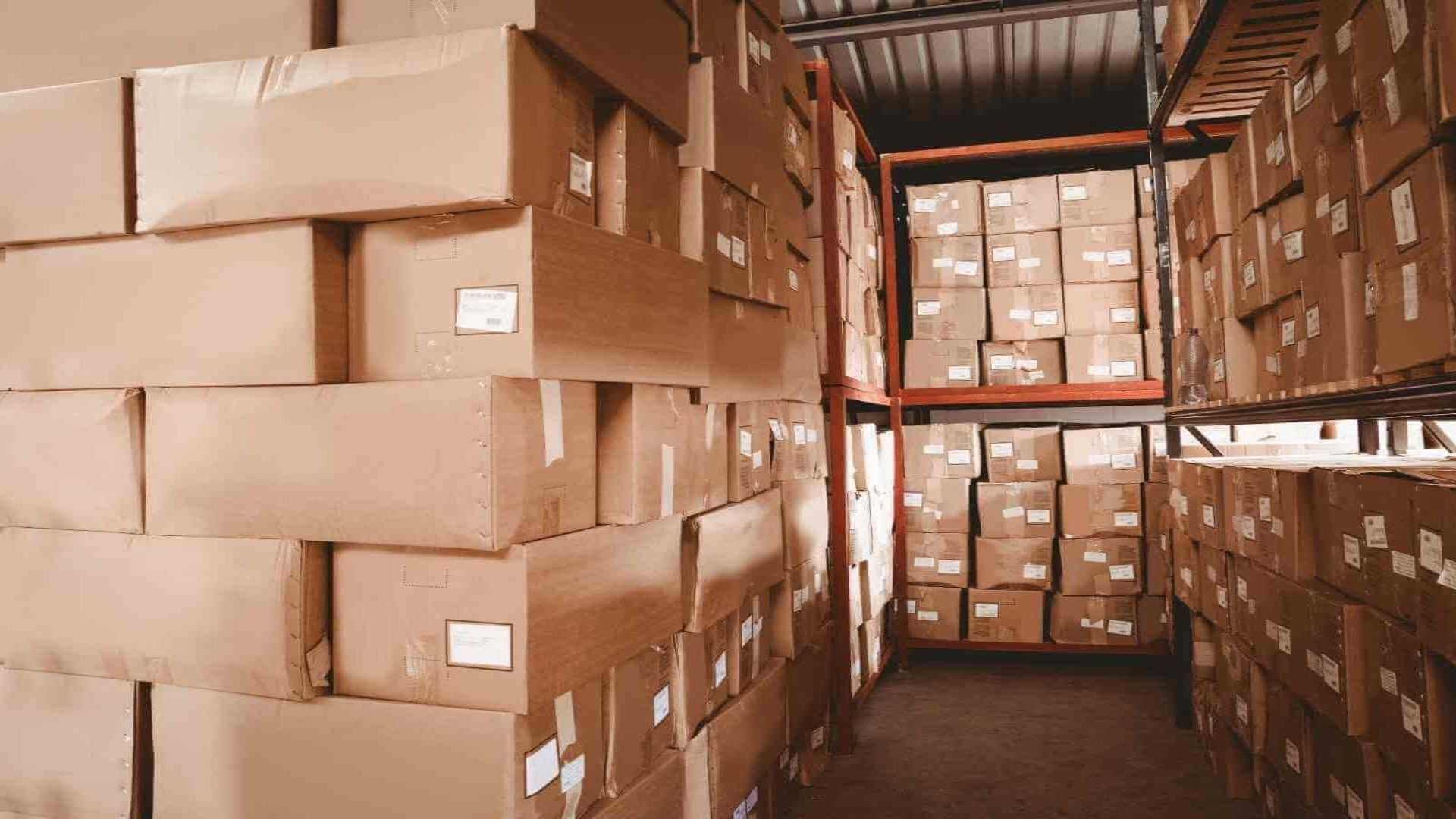
Overstock inventory does not always look like an urgent problem.
The products may be new, neatly packed and technically available for sale. Because the business has already paid for them, keeping the inventory can feel safer than accepting a discounted offer.
But unsold stock is not free to hold.
It continues to consume warehouse space, insurance, labour and working capital. Packaging may deteriorate. Demand can fall. New models can make older products less attractive. Seasonal goods may miss their selling window entirely.
The longer excess inventory remains in storage, the more important it becomes to compare its realistic recovery value with the cost of continuing to hold it.
Inventory liquidation is not automatically the right answer for every slow-moving SKU. Some products recover when demand changes or a new sales campaign begins. Others become more expensive and difficult to sell with every passing month.
These seven warning signs can help you decide when to liquidate overstock inventory rather than continuing to wait.
What Is Overstock Inventory?
Overstock inventory is merchandise held in quantities greater than current or reasonably expected demand.
It may result from:
- Overordering
- Inaccurate sales forecasts
- Cancelled customer orders
- Lower-than-expected demand
- Seasonal changes
- Product discontinuation
- Retail returns
- Supplier minimum-order requirements
- Promotional campaigns that underperformed
- Changes in customer preferences
- Store closures
- Packaging or branding updates
- Ecommerce listing restrictions
- Newer product versions entering the market
Overstock is not necessarily damaged, expired or unusable. Much of it may be new and in original packaging. The problem is that the business has more inventory than it can sell through normal channels within a reasonable period.
When that imbalance continues, excess stock can shift from an asset into a financial and operational burden.
Why Overstock Inventory Becomes Expensive
The cost recorded on the original purchase order is only one part of what inventory costs a business.
Holding inventory may also require:
- Warehouse rent
- Third-party storage fees
- Insurance
- Security
- Utilities
- Inventory management software
- Warehouse labour
- Periodic counting and auditing
- Pallet handling
- Internal transportation
- Financing costs
- Product testing
- Repackaging
- Damage allowances
- Disposal of unsellable units
There is also an opportunity cost. Space occupied by slow-moving inventory cannot be used for products with stronger demand. Cash tied up in old stock cannot be used to purchase new inventory, advertise profitable lines, pay suppliers or support business growth.
This is why managers should review overstock based on its total financial effect rather than its original cost alone.
The U.S. Small Business Administration’s business financial management guidance recommends tracking assets, costs and cash flow and using cost-benefit analysis when comparing business decisions.
The same principle applies to overstock. The right question is not only, “How much did we pay for this inventory?” It is also, “What will it cost us to keep it?”
Sign 1: Sales Have Remained Below Forecast for Several Periods
One weak month does not necessarily mean a product should be liquidated. Demand may recover after a temporary change, seasonal delay or marketing issue.
A repeated pattern is more concerning.
Compare actual sales with forecasts over several relevant periods. The appropriate period may be weeks for trend-based merchandise, months for consumer goods or quarters for slower industrial products.
Warning signs include:
- Sales remain below forecast for several consecutive periods
- Units sold continue declining
- The SKU repeatedly misses reorder expectations
- Promotions create only a brief or insignificant increase
- The expected sales cycle keeps getting extended
- New inventory arrives faster than existing units sell
- Sales teams have stopped prioritising the product
- Retail partners have reduced or cancelled reorders
Calculate the approximate time required to sell the remaining quantity at the current sales rate.
For example, if you hold 12,000 units and sell only 400 units per month, the stock represents approximately 30 months of supply before considering additional purchases or returns.
That may be acceptable for certain stable products. For seasonal, technological or trend-sensitive merchandise, it may represent a serious risk.
Do not rely only on total revenue. Review units sold, gross margin, returns, discounts and customer acquisition costs. A product may still generate sales while producing little or no meaningful contribution after expenses.
Sign 2: Storage and Handling Costs Keep Increasing
Overstock often remains in the warehouse because no single monthly charge appears large enough to force action. The real issue becomes clear when all holding costs are combined.
Review expenses such as:
- Cost per pallet per month
- Receiving and put-away fees
- Monthly storage charges
- Long-term storage surcharges
- Pick and pack expenses
- Inventory count fees
- Transfer costs between facilities
- Warehouse labour
- Insurance
- Security
- Damage or shrinkage
- Climate-controlled storage
- Contracted minimum-space commitments
Third-party logistics providers may apply additional fees when inventory remains for an extended period. Amazon and other fulfilment networks may also charge based on volume, age or utilisation.
Create a simple monthly holding-cost estimate for the affected inventory.
Monthly holding cost = storage + handling + insurance + financing + labour + expected damage or loss
Then compare the total holding cost with realistic expected gross profit from future sales.
If keeping the inventory for another six months is likely to cost more than the additional amount you hope to recover, waiting may not be financially sensible.
A liquidation offer may appear lower than your preferred selling price but still produce a better net result after avoided costs are included.
Sign 3: Inventory Is Blocking Space Needed for Better Products
Warehouse space should support products that contribute to the business.
When slow-moving stock occupies prime pallet positions, shelves or fulfilment areas, it can interfere with more profitable inventory.
Common symptoms include:
- New products cannot be received efficiently
- Fast-moving SKUs are stored in inconvenient locations
- Temporary storage must be rented
- Staff repeatedly move old stock to access active inventory
- A warehouse expansion is being considered
- Products are stored in aisles or unsuitable locations
- Order fulfilment takes longer
- Additional labour is required to reorganise stock
- Incoming shipments must be delayed
- Inventory is split across several facilities unnecessarily
In this situation, the value of liquidation is not limited to the payment received for the overstock. It also includes the value of the recovered warehouse capacity.
Freeing space may allow the company to:
- Receive current merchandise
- Improve picking efficiency
- Reduce external storage
- Consolidate warehouses
- Support a new product launch
- Lower handling costs
- Improve workplace safety
- Avoid signing a larger lease
Measure the space occupied by the excess inventory and calculate what that space costs each month. Then consider what the same space could produce if assigned to faster-moving merchandise.
If the opportunity cost is increasing, it may be time to contact bulk overstock buyers and evaluate a direct sale.
Sign 4: The Product Is Approaching the End of Its Selling Window
Some inventory loses value gradually. Other products face a specific deadline after which demand can fall sharply.
Examples include:
- Holiday merchandise
- Seasonal apparel
- Event-related products
- Licensed merchandise
- Dated promotional items
- School supplies
- Outdoor seasonal goods
- Cosmetic collections
- Food and beverages
- Supplements
- Products with batteries
- Technology accessories
- Products designed for a particular device
- Packaging connected to an old campaign
A winter product held in January may still have resale opportunities. The same product may become much harder to move in April. Waiting for the next season creates another year of storage costs and no guarantee that demand will return at the expected level.
For date-sensitive products, calculate how much shelf life remains after allowing for:
- Buyer review
- Transportation
- Warehouse receiving
- Distribution to resellers
- Retail display
- Consumer purchase and use
A product that technically expires in ten months may already have a very short commercial window once the entire resale process is considered.
The decision should be made before the selling window closes, not after.
Create alerts for seasonal cut-off dates, expiration periods and model-replacement schedules. Inventory teams should review these products more frequently than stable, non-seasonal merchandise.
Sign 5: Discounts Are No Longer Producing Meaningful Sales
Discounting is a common first response to overstock. A temporary promotion can work when price is the main reason customers are not buying.
Repeated discounting becomes less useful when the underlying problem is weak demand, product age, poor channel fit or excessive quantity.
Warning signs include:
- Each promotion produces fewer sales than the previous one
- Discounts attract traffic but not purchases
- Advertising costs exceed the margin recovered
- Customers wait for deeper discounts
- Sale products compete with current full-price products
- Returns increase after promotions
- Retail partners request larger markdown allowances
- The product sells only when priced near or below cost
- Clearance campaigns harm the brand’s pricing position
Calculate the complete cost of continuing to sell individual units:
- Advertising
- Marketplace commissions
- Payment-processing fees
- Pick and pack
- Shipping
- Customer service
- Returns
- Refunds
- Damaged-in-transit replacements
- Promotional discounts
A higher selling price does not always mean a better net recovery.
For example, selling a unit for $20 through an ecommerce channel may generate less usable cash than a lower bulk sale price after advertising, fulfilment, returns and months of storage are included.
If repeated markdowns are not reducing inventory at a meaningful pace, a bulk liquidation can provide a cleaner exit.
Sign 6: The Products Are Losing Market Relevance
Inventory value depends on current resale potential, not only on original quality.
Products can become harder to sell when:
- A newer model launches
- Device compatibility changes
- Packaging looks outdated
- Consumer preferences shift
- Fashion trends move on
- A product receives poor reviews
- A retailer stops supporting the category
- A marketplace restricts the listing
- Competitors introduce better features
- The brand changes its positioning
- Replacement parts are no longer available
- Warranty support ends
- Regulations or labelling requirements change
Technology-related products are especially vulnerable. A new version can reduce demand for an older model even when the previous product remains unused and fully functional.
Fashion, toys and social-media-driven merchandise may also lose demand quickly.
Monitor:
- Search interest
- Current listings
- Recent selling prices
- Marketplace availability
- Competitor discounts
- Product reviews
- Manufacturer announcements
- Return reasons
- Customer support questions
Do not wait for the product to become completely obsolete.
A buyer may still be able to place an aging product through discount retail, export or alternative resale channels while demand remains. Once the market becomes saturated or compatibility disappears, recovery options may narrow significantly.
Sign 7: Overstock Is Restricting Cash Flow and Purchasing Decisions
Inventory is capital in physical form.
When too much cash is tied up in slow-moving products, the business may struggle to fund activities that support future sales.
You may notice:
- Supplier invoices are harder to pay
- New purchasing is delayed
- Profitable products go out of stock
- Marketing budgets are reduced
- Credit usage increases
- Cash reserves decline
- The company cannot take advantage of supplier discounts
- New product launches are postponed
- Management spends excessive time discussing old inventory
- Overstock is repeatedly mentioned in financial meetings
At this point, the inventory problem has moved beyond the warehouse. It is affecting the company’s ability to operate and invest.
Holding the stock in the hope of recovering the full original cost may create a larger financial loss elsewhere.
Liquidation can convert the inventory into working capital. The recovered amount may be lower than the original investment, but it can be redirected toward products and activities with stronger expected returns.
A faster, certain recovery can sometimes be more valuable than a higher but uncertain recovery spread across many months.
How to Calculate Whether Waiting Still Makes Sense
A useful decision requires more than looking at the current offer.
Compare at least two scenarios:
Scenario A: Continue holding and selling normally
Estimate:
- Expected units sold
- Realistic selling price
- Gross profit
- Discounts required
- Advertising cost
- Fulfilment cost
- Returns
- Storage
- Labour
- Financing
- Damage and obsolescence
- Remaining inventory at the end of the period
Scenario B: Liquidate now
Estimate:
- Bulk purchase offer
- Freight responsibility
- Preparation costs
- Inspection costs
- Payment timeline
- Warehouse space recovered
- Storage costs avoided
- Labour saved
- Cash available for reinvestment
Use conservative numbers rather than best-case assumptions.
A simple comparison can be expressed as:
Expected net value of waiting = expected future sales revenue − all selling and holding costs − estimated value loss
Compare that figure with:
Net liquidation recovery = bulk offer − transaction costs + holding costs avoided
This is an operational decision model, not an accounting or tax valuation method. Consult your accountant for guidance on how inventory write-downs or losses should be recorded.
When You Should Not Rush to Liquidate
Liquidation is not always the best first step.
Holding inventory may still make sense when:
- Demand is temporarily delayed but remains supported by reliable orders
- The product has a long shelf life
- Storage costs are low
- The merchandise is not becoming obsolete
- A confirmed seasonal selling period is approaching
- A marketing or distribution problem can be corrected
- The inventory is needed for service or warranty obligations
- Another regular customer is likely to purchase it
- The business can return the products to the supplier
- The product can be repackaged or bundled profitably
- The brand would face greater damage from uncontrolled resale than from continued storage
Set a review date and measurable conditions.
For example:
Hold the inventory for 60 more days. If monthly sales remain below 500 units or storage exceeds a defined threshold, begin liquidation.
A defined trigger prevents the business from postponing the decision indefinitely.
How to Prepare Overstock Inventory for Liquidation
When liquidation becomes the practical option, preparation can reduce delays.
Create an accurate manifest
Include:
- Product name
- Brand
- SKU
- UPC or GTIN
- Category
- Quantity
- Condition
- Packaging condition
- Unit cost
- MSRP
- Current selling price
- Expiration date
- Units per case
- Case count
- Pallet count
- Warehouse location
- Product restrictions
Use one row for each unique SKU or variation.
Separate inventory by condition
Do not mix factory-sealed products, shelf pulls, returns and damaged merchandise under one condition.
Confirm the available quantity
Remove units that have already been sold, returned, transferred or allocated to another order.
Photograph the actual inventory
Provide clear photographs of products, labels, packaging, master cartons, pallets and visible damage.
Identify restrictions
Tell the buyer about marketplace, geographic, advertising or brand-protection requirements.
Provide logistics information
State the pickup location, number of pallets, approximate weight, loading access and removal deadline.
Clarify your priorities
Explain whether you need:
- The fastest possible removal
- A complete-lot purchase
- Specific channel restrictions
- Pickup by a particular date
- Consideration of partial offers
- Several warehouses cleared together
Clear priorities help potential buyers determine whether they can meet the business’s requirements.
How Bulk Overstock Buyers Evaluate Inventory
A buyer may consider:
- Current demand
- Product condition
- Packaging
- Quantity
- Number of SKUs
- Product age
- Expiration dates
- Realistic resale price
- Market competition
- Restrictions
- Freight
- Testing or sorting requirements
- Expected sell-through period
- Warehouse location
There is no universal percentage of MSRP used for every inventory lot.
Two lots with the same retail value may receive different offers because one is current, sealed and easy to distribute while the other is aged, mixed-condition or restricted.
Accurate information helps reduce uncertainty. It does not guarantee a particular offer, but it allows the buyer to assess the products on their actual characteristics.
Alternatives to a Direct Bulk Sale
Before making a final decision, consider other possible routes.
Return inventory to the supplier
Review purchase terms to determine whether returns, credits or exchanges are available.
Transfer stock between locations
A slow product in one region may have stronger demand elsewhere.
Bundle products
Pair slow-moving inventory with complementary products when the bundle remains useful and financially sensible.
Sell through clearance channels
Outlet stores, discount events or controlled online clearance may work when your company has time and fulfilment capacity.
Use consignment
Consignment may offer different recovery potential, but payment depends on future sales and may take longer.
Donate suitable products
Donation may be appropriate for certain usable merchandise. Discuss documentation and tax treatment with a qualified adviser.
Recycle or dispose responsibly
Some expired, damaged or obsolete products may not be suitable for resale. The U.S. Environmental Protection Agency’s Sustainable Materials Management guidance encourages considering the full lifecycle of materials and reducing unnecessary waste.
Follow all applicable product, environmental and disposal requirements.
Common Overstock Liquidation Mistakes
Avoid these problems:
- Waiting until products are obsolete
- Using outdated inventory quantities
- Inflating MSRP
- Hiding damaged packaging
- Omitting expiration dates
- Mixing several conditions
- Failing to disclose marketplace restrictions
- Providing unclear photographs
- Ignoring freight costs
- Accepting unclear payment terms
- Releasing inventory without written documentation
- Choosing a buyer based only on the highest initial number
- Continuing to purchase the same SKU while trying to liquidate it
- Failing to investigate why the overstock occurred
Liquidation addresses the current inventory. A root-cause review helps prevent the same problem from returning.
Preventing Future Overstock
After clearing the affected inventory, review how it accumulated.
Consider improving:
- Demand forecasting
- Reorder points
- Supplier minimums
- Purchase approval
- Seasonal planning
- Promotional forecasting
- Product launch quantities
- Return analysis
- SKU-level reporting
- Inventory aging reports
- Communication between sales and purchasing
- Automated low-velocity alerts
- Exit plans for new products
Create aging categories such as:
- 0–30 days
- 31–60 days
- 61–90 days
- 91–180 days
- 181–365 days
- More than 365 days
The relevant thresholds will vary by product category, but consistent reporting makes it easier to identify problems before they become expensive.
Frequently Asked Questions
When should a business liquidate overstock inventory?
A business should consider liquidation when sales remain below forecast, holding costs rise, products approach obsolescence, discounts stop working or inventory begins restricting cash flow and warehouse capacity.
How long should overstock be held before liquidation?
There is no universal period. The answer depends on product shelf life, seasonality, demand, storage costs and the risk of obsolescence. Establish review points appropriate to each category.
Is overstock inventory the same as dead stock?
Not always. Overstock means the business holds more inventory than current demand supports. Dead stock generally refers to merchandise that has stopped selling or is highly unlikely to sell through normal channels.
How is overstock inventory valued?
Buyers may consider condition, quantity, current demand, resale price, packaging, age, restrictions, freight and the work required to prepare the products for resale.
Can new inventory still be considered overstock?
Yes. Products can be brand-new and factory-sealed while still being overstock if the quantity exceeds expected demand.
Should I discount inventory before liquidating it?
A controlled promotion may be worth testing when price is the main barrier. However, repeated discounts that fail to reduce the quantity meaningfully may create additional costs and damage pricing expectations.
Can mixed product categories be liquidated together?
Potentially. Organise the manifest by SKU, category and condition. Some buyers may purchase a complete mixed lot, while others may focus on specific categories.
What information should I send to an overstock buyer?
Provide a current manifest, photographs, quantities, conditions, product identifiers, pricing context, warehouse location, expiration dates and resale restrictions.
Does liquidation always mean accepting a loss?
Not necessarily, but liquidation value is generally different from retail value. The correct comparison should include storage, labour, advertising, fulfilment and the cost of continuing to hold the inventory.
How can I protect my brand during liquidation?
Document marketplace, geographic and advertising restrictions before accepting an offer. Ask how the products will be resold and include essential conditions in the written agreement.
Decide Before Overstock Loses More Value
Overstock rarely becomes easier to manage simply because more time passes.
If sales remain weak, storage costs continue increasing and products are losing relevance, waiting may reduce the amount your business can ultimately recover.
Review each affected SKU using current demand, realistic resale value, holding costs and remaining shelf life. Compare the net value of waiting with the net recovery and cost savings available through liquidation.
When the signs point toward a bulk sale, organise your manifest, verify the inventory and gather clear photographs.
Then submit your overstock inventory for review. A complete submission allows Overstock Bulk Buyers to determine whether the merchandise fits its purchasing requirements and available resale channels.

